

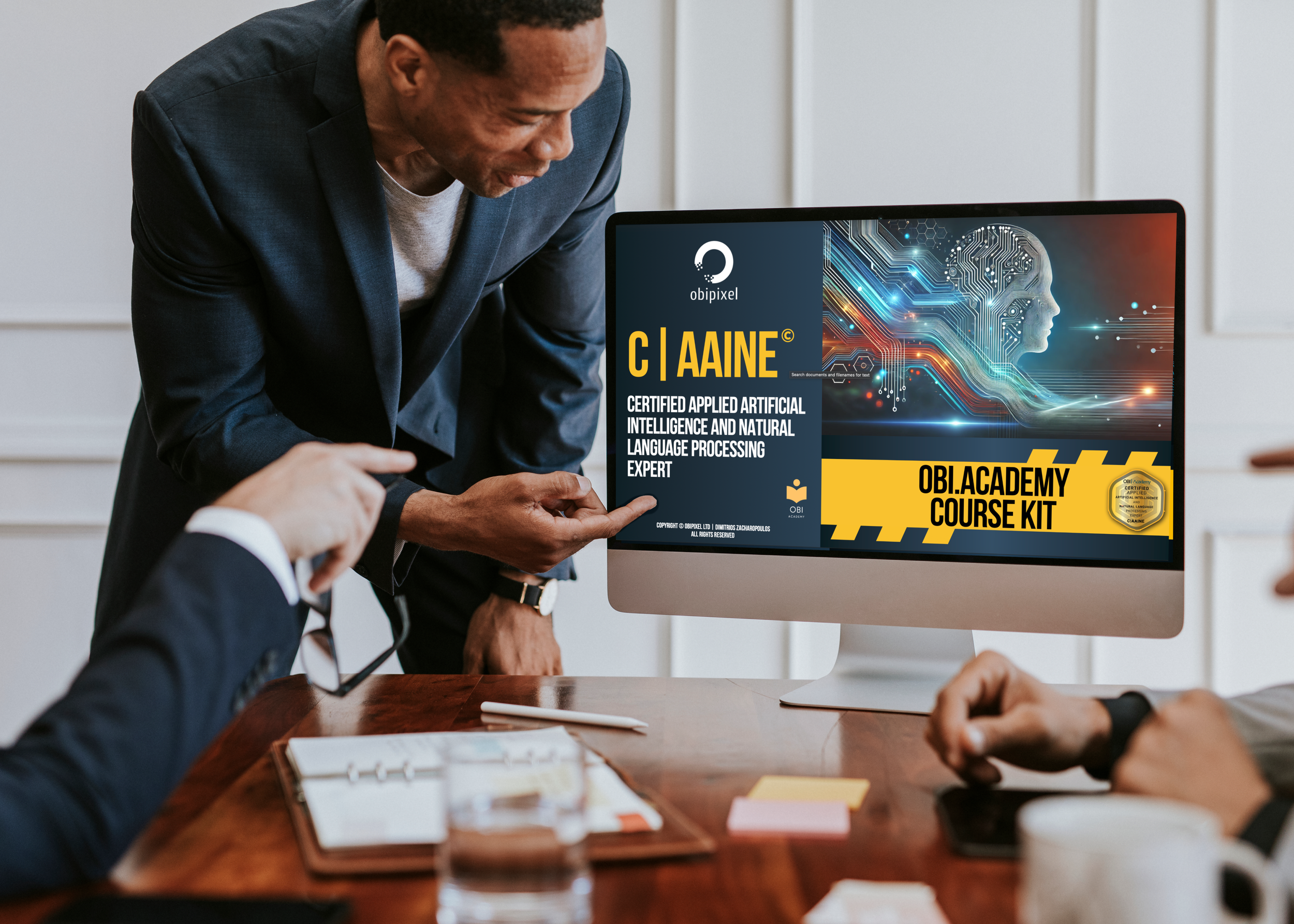
NEW! Upcoming Course for 1st February 2026
Certified Applied Artificial Intelligence and Natural Language Processing Expert (C|AAINE™)
The Certified Applied Artificial Intelligence and Natural Language Processing Expert (C|AAINE) course is an advanced, hands-on training programme designed to equip participants with the knowledge and practical skills to build, fine-tune, and deploy AI models, both generative and non-generative, for solving real world problems in diverse domains. Using both open-source models (LLaMA 3, Mistral, Claude, Grok, etc.) and APIs (OpenAI GPT-4o/5.2), learners will architect complete NLP and multimodal AI solutions with real-time deployment,
dashboarding, and domain-specific optimisation.
Certified Applied Artificial Intelligence and Natural Language Processing Expert (C|AAINE™)
The Certified Applied Artificial Intelligence and Natural Language Processing Expert (C|AAINE™) course is a deeply practical 5-day programme designed to empower developers, data scientists, and AI practitioners with real-world skills in Natural Language Processing (NLP), Large Language Models (LLMs), and multimodal AI systems.
This course allows Students to build, fine-tune, evaluate, and deploy modern AI models across real scenarios using tools like LLaMA 3, Mistral, Claude, OpenAI GPT‑4o/5.2, and Gemini. From building NLP pipelines to creating multimodal dashboards, this course bridges research with production deployment.
Who Should Attend?
This course is ideal for:
• AI/ML Developers and Engineers
• Software Engineers integrating NLP into products
• Data Scientists and Analysts working on language models
• Tech leads building GenAI solutions for industry
• Cybersecurity, Finance, and Healthcare technologists exploring domain-specific LLMs
What You’ll Learn
By the end of the course, participants will be able to:
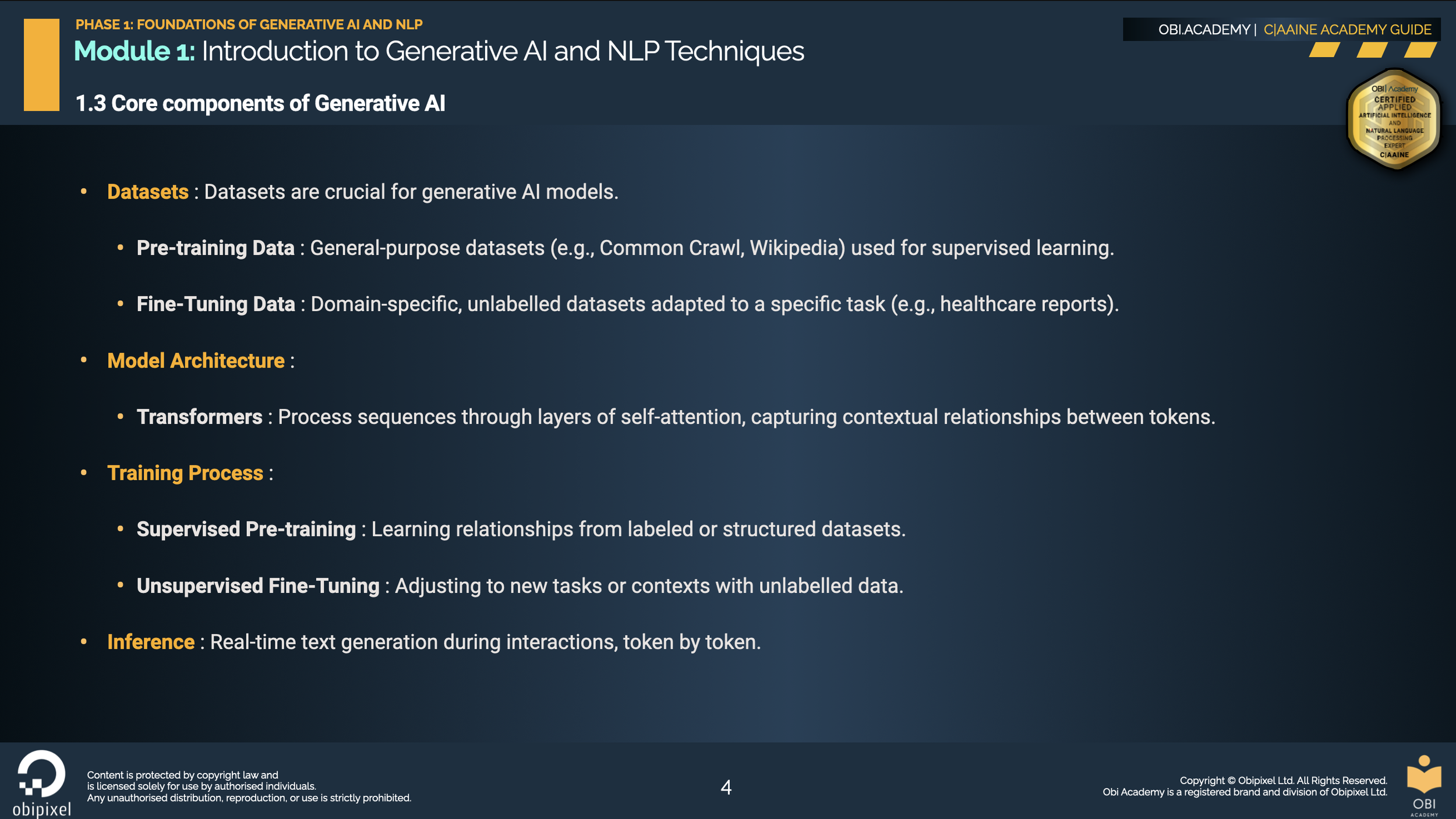
• Understand and explain the architecture of transformer-based LLMs
• Build NLP pipelines using LLaMA 3, Mistral, GPT‑5.2, and Claude
• Perform fine-tuning, sentiment analysis, summarisation, translation, and CoT reasoning
• Deploy models in Python and C#, with secure APIs and dashboards
• Build real-time AI pipelines and integrate them into enterprise systems
• Use multimodal models for text-image generation, annotation, and reporting
• Apply models to real domains like Cybersecurity, Finance, Healthcare, and Retail
• Understand the ethical implications of deploying LLMs in the real world
Key Technologies Covered
• LLaMA 3, Mistral, Claude, OpenAI GPT‑4o/5.2, Gemini, Grok
• Hugging Face Transformers
• Ollama & OpenWebUI for model management
• Python 3 & C# integrations
• LangChain, vector databases, embeddings
• Web and desktop deployment frameworks
Hands-On Labs (23+)
Students will complete labs including:
• Deploying LLaMA 3 locally using Ollama
• Tokenisation, embeddings, and attention visualisation
• Fine-tuning using LoRA and adapters
• Sentiment analysis, translation, and multilingual summarisation
• C# + OpenAI integration for CoT reasoning
• Multimodal dashboard construction and deployment
• Real-time pipeline monitoring and case studies
View on Social Media
Course Days (13 Modules over 5x days)
• Day 1: Foundations of NLP and Transformers
• Day 2: Fine-Tuning, Prompt Engineering, and LLM Strategies
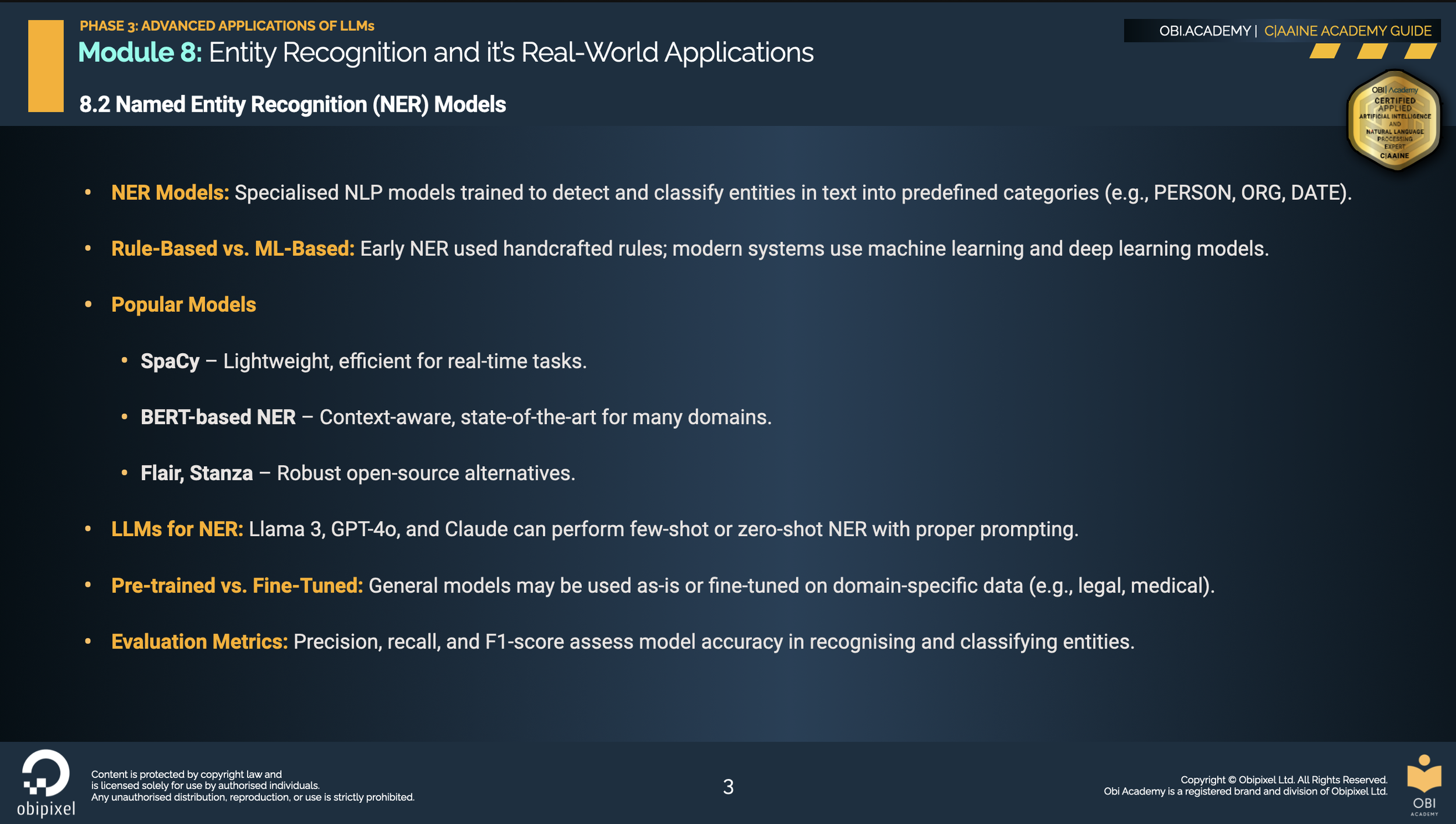
• Day 3: Real-World Applications: Entity Recognition, Translation, Summarisation
• Day 4: Deployment in Python, Web & C# + Multimodal Content Generation
• Day 5: Building Dashboards, AI Pipelines, Evaluation, and Capstone Labs
Target Sectors
• Cybersecurity: Threat detection, log summarisation, alert generation
• Finance/Banking: Report summarisation, compliance automation, fraud detection
• Healthcare: Multilingual patient record summarisation, diagnostics
• Legal: Contract analysis, clause identification, entity extraction
• Retail & E-Commerce: Image captioning, multilingual product listings
• Government & Public Sector: Secure NLP applications and dashboards
Prerequisites
• Proficiency in Python 3
• Basic understanding of machine learning and NLP
• Ideally you have completed our Certified Artificial Intelligence and Machine Learning Professional (C|AIMLP) course first.
• Familiarity with REST APIs and model deployment (helpful but not mandatory)
CURRICULUM
Take your AI and Machine Learning skills to a new level!
5x days of intense, quality and fun learning.
Aesthetically pleasing in print, digital and audio formats.
Horizontal learning experience for more immersive study.
80+ Hours of learning rich, targeted and in-depth content without the fluff.
Content, demos, labs and exercises prepared by our professionals, at every stage and topic of the course for beginners and advanced levels.
Official and only learning courseware, for the C|AAINE™ online and on-site course.
Course Formats
Digital Courseware Book: for instructor-led courses (online or on-site) and for eLearning platform.
Print Courseware Book: for instructor-led courses (online or on-site) only and on-demand.
Course delivery:
Online self-paced self-study (via our Obi.Academy eLearning audio/visual platform)
Online course delivery (via our Obi.Academy eLearning audio/visual platform)
Onsite course delivery (via our partners Startel B.V. in the Netherlands and South Africa)
Course Delivery:
The Certified Applied Artificial Intelligence and Natural Language Processing Expert (C|AAINE™) course is available online as a self-paced self-study course or as an instructor-led online and onsite, with our approved training partners (ATPs) in the UK and Europe. Obipixel Ltd is actively in discussions with potential partners in the USA, Africa and Asia. To enquire about becoming an approved training provider and affiliate or a learner/attendee on our courses with our partners with Obi.Academy please contact us for further details.
Course Breakdown
Day 1 – Foundations of NLP and Generative AI
Module 1: Introduction to Generative AI and NLP Techniques
1.1 What is Generative AI?
1.2 Core NLP Concepts: Tokens, Embeddings, Transformers, Attention
1.3 Setting Up Tools: LLaMA 3, Mistral, APIs, Platforms
1.4 Preprocessing and Normalisation Techniques
Module 2: Foundational NLP with Pre-trained Models
2.1 Tokenisation, Embeddings
2.2 RNNs, Word2Vec, GloVe
2.3 Handling Missing/Noisy Data
2.4 Feature Engineering (TF-IDF)
Labs:
Lab 0: Load and Interact with a Pre-trained LLaMA 3 Model
Lab 1: Tokenisation and Embeddings
Lab 2: Text Preprocessing
Lab 7: RNNs
Lab 8: Word2Vec
Lab 9: GloVe
Day 2 – Fine-Tuning and Customisation of AI Models
Module 3: Fine-Tuning LLMs
3.1 What is Advanced Fine-Tuning?
3.2 Instruction-Tuning
3.3 Domain Adaptation
3.4 Parameter-Efficient Fine-Tuning
Module 4: Applied Prompt Engineering
4.1 Prompt Engineering for Custom Tasks
4.2 Chain-of-Thought Reasoning
4.3 Zero-shot, Few-shot, Multi-shot Prompts
4.4 Evaluation and Deployment
Labs:
Lab 3: Sentiment Analysis Using LLMs
Lab 4: Summarisation with LLaMA 3
Lab 5: Advanced Fine-Tuning Techniques
Lab 10: Attention Mechanisms in Transformer Models
Day 3 – Advanced Applications: NER, Multilingual, Multimodal
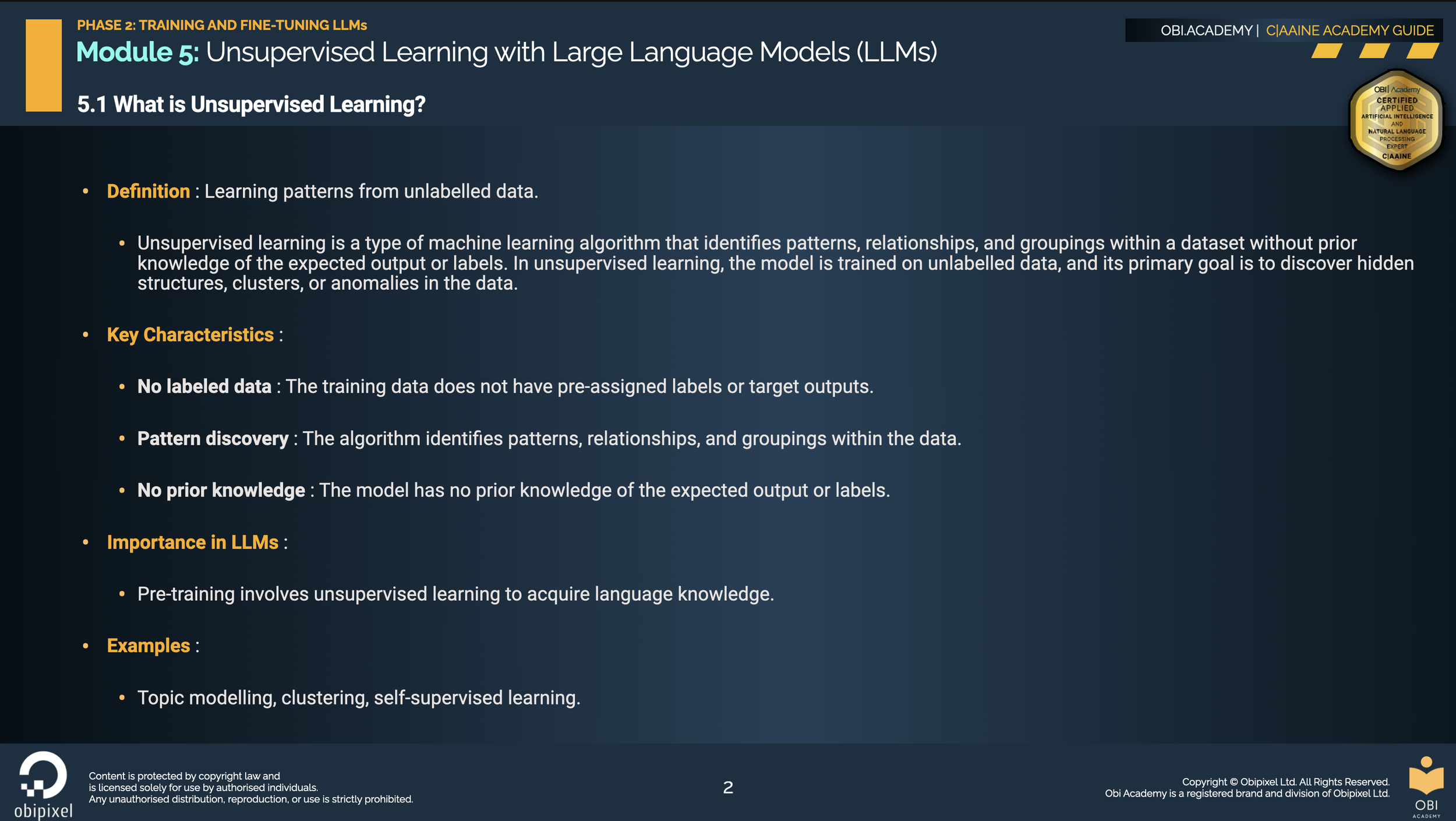
Module 5: Named Entity Recognition (NER)
5.1 What is Entity Recognition?
5.2 NER Models
5.3 Applications of Entity Recognition
5.4 Steps, Challenges & Ethics
Module 6: Translation & Multilingual Summarisation
6.1 What is Machine Translation?
6.2 Challenges in Translation
6.3 Multilingual Summarisation
6.4 Translation Pipelines & Real-World Applications
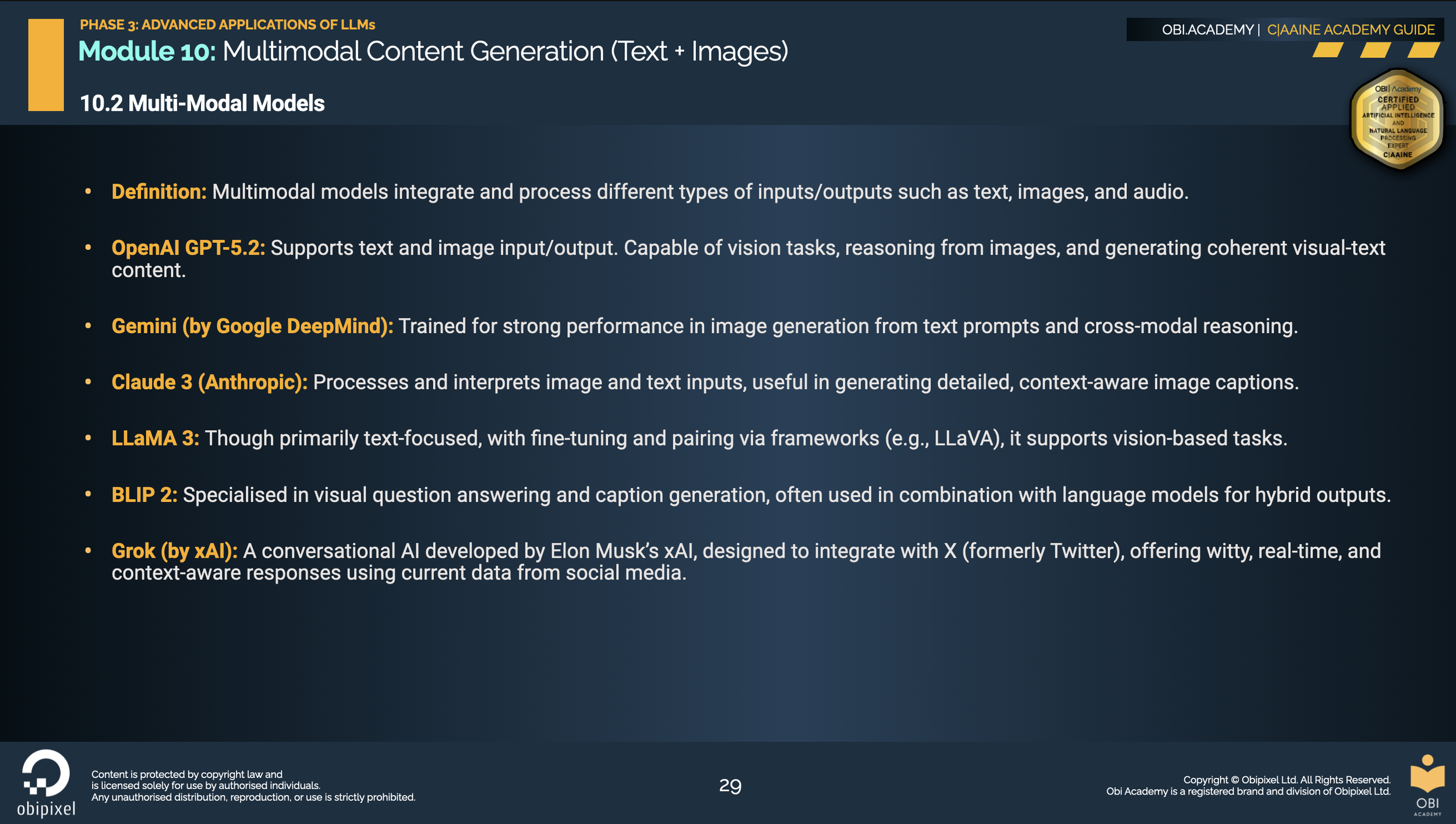
Module 7: Multimodal Content Generation
7.1 What is Multimodal Generation?
7.2 Multimodal Models (Gemini, BLIP, Grok)
7.3 Applications in Industry
7.4 Pipelines and Ethical Challenges
Labs:
Lab 6: Entity Recognition in Real Applications
Lab 11: Translation Tasks
Lab 12: Multilingual Summarisation
Lab 13: Summarisation with LLaMA 3
Lab 14: Translation with LLaMA 3
Lab 15: Fine-tuning LLaMA 3 for Specific Domains
Day 4 – Deployment and Dashboarding
Module 8: Model Deployment (Web, Python, C#)
8.1 What is Model Deployment?
8.2 Deployment Workflow
8.3 Web, Python, and C# Integrations
8.4 Case Studies & Ethical Considerations
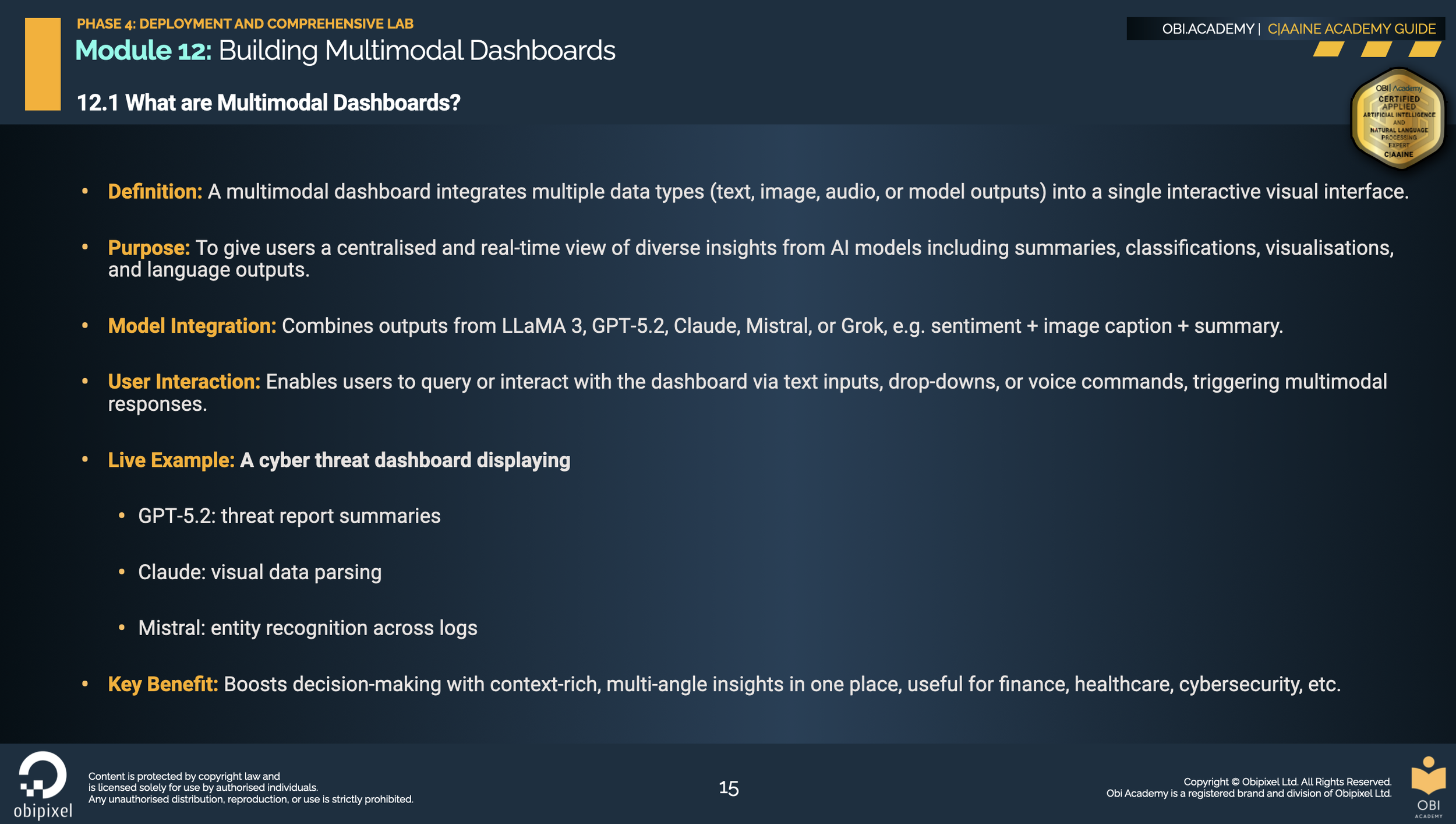
Module 9: Building Multimodal Dashboards
9.1 What are Multimodal Dashboards?
9.2 Components and Frameworks (Streamlit, Dash, Blazor)
9.3 Connecting LLMs to Dashboards
9.4 Use Cases and Best Practices
Labs:
Lab 16: Text Generation with Mistral
Lab 17: Multilingual Analysis with Mistral
Lab 18: Attention Mechanisms in Mistral
Lab 19: OpenAI API Integration in C#
Lab 20: Summarisation with OpenAI API in C#
Day 5 – Pipelines, Real-Time Systems, and Final Integration
Module 10: Comprehensive Pipeline Implementation
10.1 What is a Comprehensive Pipeline?
10.2 Building NLP Pipelines
10.3 Multimodal and Real-Time Pipelines
10.4 Deployment and Monitoring
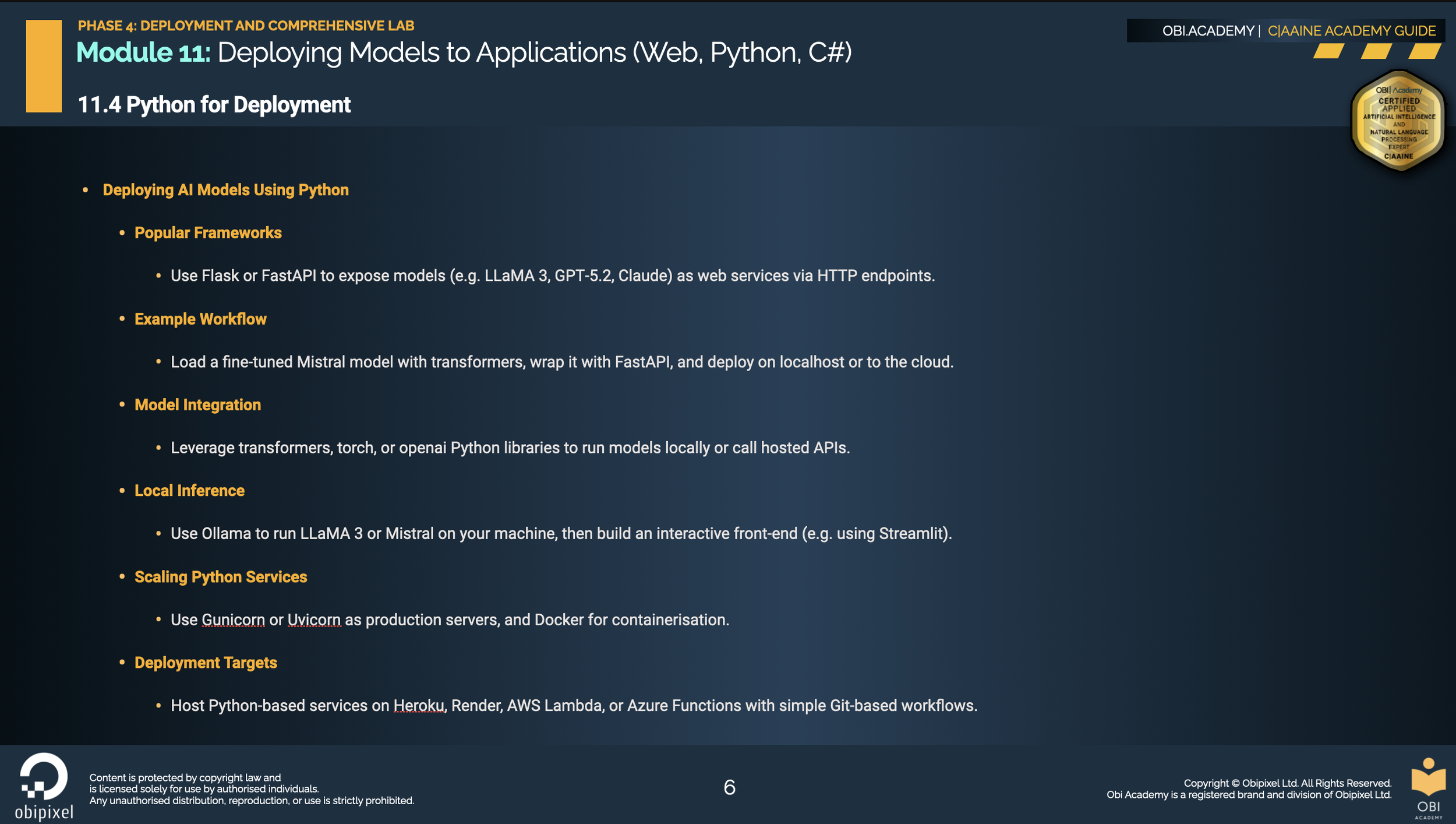
Module 11: Deploying Models to Applications (Web, Python, C#)
11.1 Deployment Workflow
11.2 Web App Integration
11.3 Python & C# API Integration
11.4 Case Studies
Module 12: Building Multimodal Dashboards
12.1 Components of a Multimodal Dashboard
12.2 Frameworks for Development
12.3 Connecting Models to Dashboards
12.4 Sector-specific Use Cases
Module 13: Full Pipeline Case Studies
13.1 Real-Time Threat Detection (Cybersecurity)
13.2 Financial Forecasting Pipeline
13.3 Monitoring, Scaling and Evaluation
Labs:
Lab 21: Real-Time Pipeline with LLMs
Lab 22: Build a Multimodal Dashboard with LLaMA 3 + Streamlit
Lab 23: Deploy and Monitor a Full Pipeline
Examination
The examination has been strategically developed in-house and is only offered by Obipixel Ltd at Obi.Academy. This ensures the best quality possible and the most intensive and rigorous testing of our students, without compromise. Many examination providers do not adhere to this focus, and thus examination questioning is diluted and often not even relevant. Once our students have learnt their subject matter using the Certified Applied Artificial Intelligence and Natural Language Processing Expert (C|AAINE™) Academy Guide and they have chosen to attend our online or onsite courses, they will be tested correctly and fairly without worrying about content that is not relevant and not meant to be in their examination, which is such a systemic problem in today’s examinations across so many vendor products.
Duration: 4 hours
Pass Mark: 75%
Proctoring: Exam is proctored online with webcam and audio monitoring.
Questions: 150 (from a pool of 1000 randomly rotated questions in a blockchain for absolute control).
Exam Voucher: Available for order and provided by Obi.Academy and any Approved Training Provider. Vouchers are available at £200/voucher/student.
Achievement: Certification (for life), Certificate and Digital Badge.